
When I was in history class in school, I was bored.
Not because history wasn’t important, but because it felt distant. The people we studied were names on a page—interesting, perhaps, but disconnected from my own life. I remember thinking that history might feel very different if I were actually related to someone we were learning about.
One group that did stand out to me even then was the Green Mountain Boys. Their exploits during the early days of the American Revolution felt bolder and less conventional than the orderly narratives found in textbooks. I remember thinking it would be fascinating to be connected to someone like that.
Years later, through genealogical research, I discovered that I am.
Through documented colonial records, I am a third cousin, eight times removed from Ethan Allen, the outspoken leader of the Green Mountain Boys. While he is not a direct ancestor, he is part of my extended family network, connected through well-documented seventeenth-century New England families.
Who Was Ethan Allen?
Ethan Allen was born on 10 January 1738 in Litchfield, Connecticut, the son of Joseph Allen and Mary Baker.¹ He grew up on the Connecticut frontier and later became closely associated with the territory that would become Vermont. Allen was largely self-educated, deeply independent, and known for his forceful personality—traits that shaped both his leadership and his reputation.
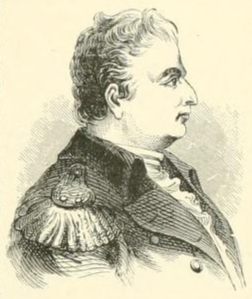
Allen is best remembered for his role in the capture of Fort Ticonderoga in May 1775. Leading a force of Green Mountain Boys, along with Benedict Arnold, Allen surprised the small British garrison and secured the fort with little resistance.² The artillery seized at Ticonderoga later proved critical in forcing British troops to evacuate Boston.³
Beyond that single event, Allen remained a controversial figure. He was never formally commissioned as an officer in the Continental Army and frequently clashed with authorities. He was captured by British forces during an ill-fated invasion of Quebec in 1775 and spent more than two years as a prisoner of war.⁴ After his release, Allen continued to advocate fiercely for Vermont’s independence, resisting efforts by both New York and the Continental Congress to assert control over the region.⁵
Allen’s legacy is complex: he was a revolutionary hero to some, a political irritant to others, and a man whose independence often placed him at odds with the very cause he supported.
The Genealogical Connection
The relationship between Ethan Allen and myself is supported by original town, church, and probate records from Massachusetts and Connecticut that document both lines back to a shared seventeenth-century couple.
Ethan Allen’s maternal ancestry traces through Mercy Wright of Deerfield, Massachusetts, the daughter of Judah Wright and Mercy Burt. Mercy Burt was the daughter of Henry Burt and Eulalia March, early settlers of Springfield, Massachusetts. Both Henry Burt and his wife Eulalia are well documented in Springfield town records, church registers, and probate material, and it is through their children that multiple New England family lines descend.⁶
My own lineage also descends from this same couple—Henry Burt and Eulalia March—but through a different child, Dorcas Burt, who married John Stiles. Dorcas appears repeatedly in Springfield and Windsor records, and her descendants are documented across Massachusetts, Connecticut, New Hampshire, and Vermont through successive generations.⁷
Because both Ethan Allen and I descend from Henry Burt and Eulalia March through different children and across multiple generations, we share them as common ancestors. This places us within a distant but clearly documented kinship network rooted in early colonial New England, established through original records rather than family tradition or assumption.
Why a Distant Relationship Still Matters
I am not claiming Ethan Allen as a direct ancestor, nor suggesting that a distant cousin relationship confers historical importance. What it does provide is context.
The Green Mountain Boys no longer feel like anonymous figures acting in isolation. They were men operating within the same colonial communities, family networks, and record-keeping systems as my own ancestors—networks shaped just as much by women as by men. Without women like Eulalia March, Mercy Burt, and Mercy Wright, none of these lines would exist to be traced today.
The American Revolution did not happen in abstraction—it unfolded among families whose lives intersected in ways we can still trace through the records they left behind.
For me, that realization transformed history from something remote into something tangible. It closed a circle that began in a classroom years ago, when history felt dull simply because it felt disconnected.
Sometimes history doesn’t become interesting because it changes—but because our relationship to it does.
Notes
- Vital Records of Litchfield, Connecticut, 1721–1850 (Hartford: Connecticut Society of Colonial Wars, 1907), 23.
- Ethan Allen, A Narrative of Colonel Ethan Allen’s Captivity (Philadelphia: Robert Bell, 1779), 11–15.
- Robert Middlekauff, The Glorious Cause: The American Revolution, 1763–1789 (New York: Oxford University Press, 1982), 284–286.
- Allen, Narrative of Captivity, 49–112.
- Charles A. Jellison, Ethan Allen: Frontier Rebel (Syracuse, NY: Syracuse University Press, 1969), 201–245.
- Vital Records of Springfield, Massachusetts, to the Year 1850, vol. 1 (Springfield, MA: Springfield Printing and Binding Co., 1923), Burt entries; Hampden County, Massachusetts, Probate Records, estate of Henry Burt (1662).
- Vital Records of Windsor, Connecticut, to the Year 1850 (Hartford: Connecticut Society of Colonial Wars, 1904); Vital Records of Westfield, Massachusetts, to the Year 1850 (Boston: New England Historic Genealogical Society, 1904).

 The Tumbleweed