
Looking Back at an Earlier Story
When I first wrote about my 2× great-grandmother Rosa Susan “Rosie” Smith in 2018, the outline of her life was already clear: a childhood in Pennsylvania and Michigan, a long marriage to William Doonan, years spent in northern Ontario, and a life that stretched into the early 1950s. What remained unclear then were the brief, uncomfortable gaps — especially Rosie’s short-lived first marriage to Thomas Osborn and the compressed timing of her remarriage to William Doonan.
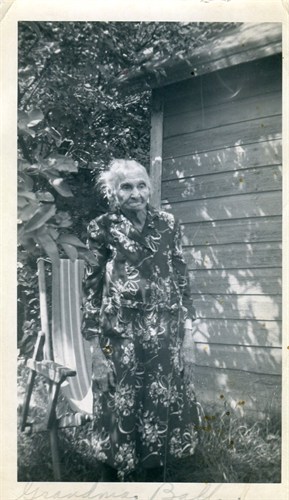
In the years since, additional records, closer reading of familiar sources, and the availability of autosomal DNA evidence have allowed some of those gaps to be examined more carefully.
Re-examining the Marriage to Thomas Osborn
Rosie married Thomas Osborn on 17 February 1882 in Bay County, Michigan, when she was just sixteen years old.¹ The marriage was solemnized by Justice of the Peace Nathaniel Enman and witnessed by Charles Horsford and Mary Ann Leary.² It was formally recorded on 27 April 1882.

At the time of the earlier post, it was unclear whether this marriage ended through divorce or death. A subsequent review of the complete 1880 federal census for Beaver Township and Kawkawlin Township — examined page by page — failed to locate Thomas Osborn in either community.³ No additional census, land, probate, or newspaper records have been identified that place him in Rosie’s orbit before or after the marriage.
The record, taken as a whole, suggests a marriage that existed briefly and left no lasting documentary footprint beyond the register itself.
A Compressed Timeline, Clarified
Rosie’s daughter, Rosa Jane Doonan, was born on 22 August 1882 — less than seven months after the Osborn marriage and several months before Rosie’s marriage to William Doonan on 11 November 1882.⁴ The timeline, while long visible, takes on sharper focus when examined alongside later evidence.

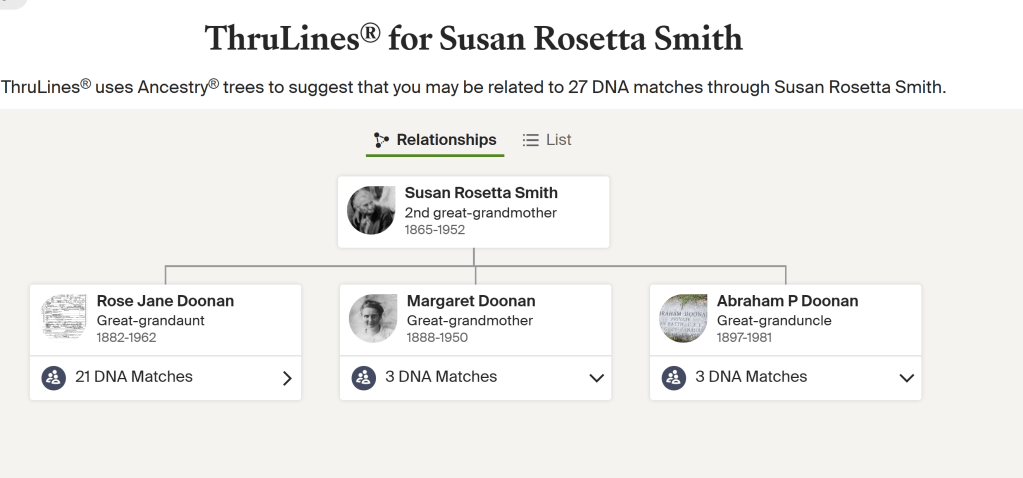
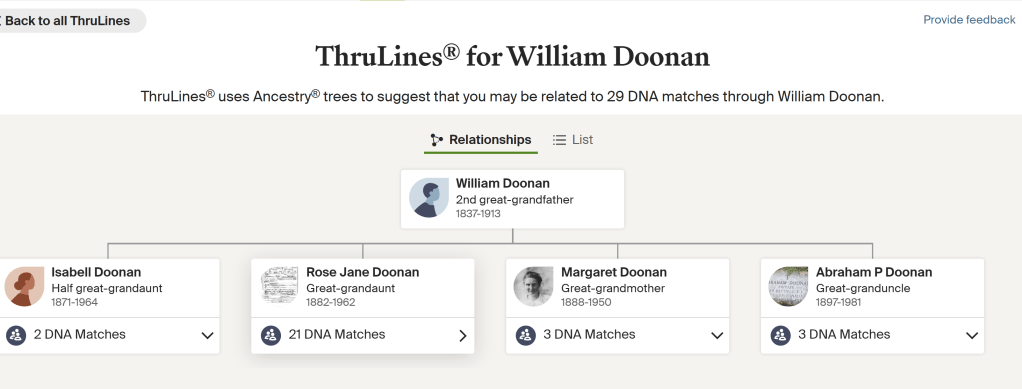
Modern autosomal DNA results now provide important clarification. Multiple DNA matches descending through independent children of Rosa Jane consistently align with William Doonan’s family.⁵ This pattern strongly supports William Doonan as Rosa Jane’s biological father and shows no comparable genetic connection to Thomas Osborn.
What once appeared as an unresolved question in the paper record is now better understood through the combination of documentation and DNA.
What the Witnesses — and Their Absence — Suggest
The Osborn marriage was witnessed by two community members who do not appear to have been relatives of either the bride or groom. No Osborn or Smith family members were listed as witnesses. Combined with Osborn’s absence from local census records, the marriage appears to have been formally executed but socially thin — a legally valid union that did not establish a shared household or lasting family connection.
This does not explain why the marriage occurred, but it helps explain why it disappeared so completely from the documentary record.
What Hasn’t Changed
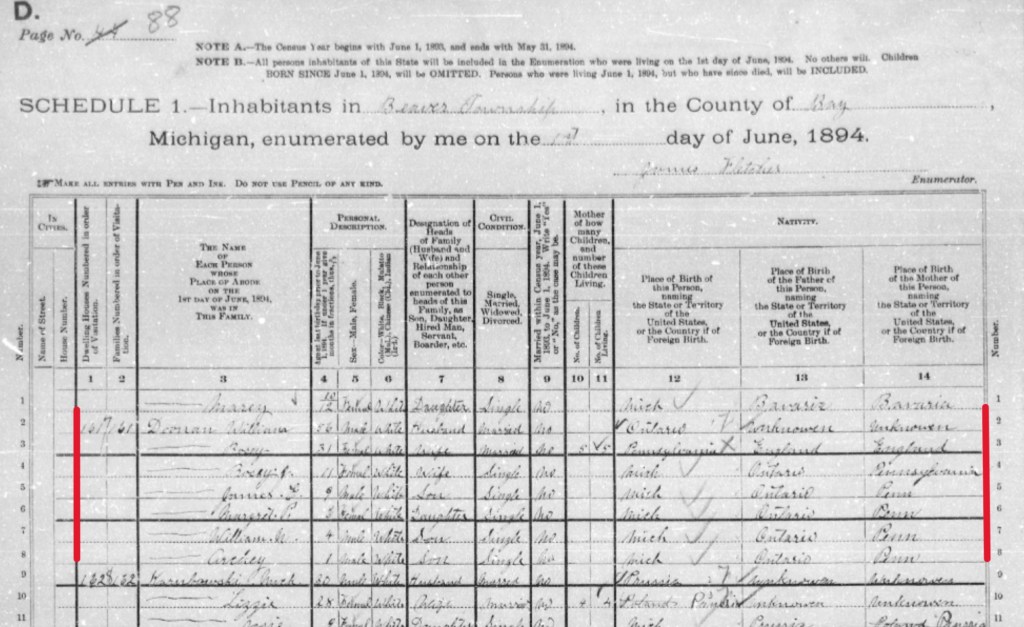
What has not changed since the earlier post is the broader shape of Rosie’s life. Her long marriage to William Doonan, the birth and loss of children, the move to northern Ontario in 1908, and her later years as “Grandma Ball” within the extended family remain exactly as they were first understood.
If anything, the additional research sharpens rather than softens that picture. Rosie’s brief marriage to Thomas Osborn now appears as a momentary interruption rather than a defining chapter — a small but telling episode in a life otherwise shaped by endurance, adaptation, and persistence.
Conclusion
Family history rarely unfolds neatly. What can be known at one moment often changes as new records surface and new tools become available. Rosie’s story is no exception. The outlines were always there, but time and patience have filled in some of the finer lines.
This later look at Rosie’s life does not replace the earlier telling. Instead, it reflects the ongoing nature of historical research — the understanding that some answers arrive only years after the first questions are asked.
Sources
- Bay County, Michigan, Marriage Register, Thomas Osborn and Rosie Smith, 17 February 1882.
- Bay County, Michigan, Marriage Register (officiant and witnesses), same entry.
- 1880 U.S. Federal Census, Beaver Township and Kawkawlin Township, Bay County, Michigan.
- Michigan Birth Records, Rosa Jane Doonan, 22 August 1882; Bay County, Michigan, Marriage Records, William Doonan and Rosie Smith, 11 November 1882.
- AncestryDNA autosomal matches through multiple independent descendant lines of Rosa Jane Doonan.
 The Tumbleweed